DÚDÚ
Digital painting · 30 × 40 in · 2024Available
2024
Digital portrait painting · 30 × 40 in
ÓKUNRÍN
Digital
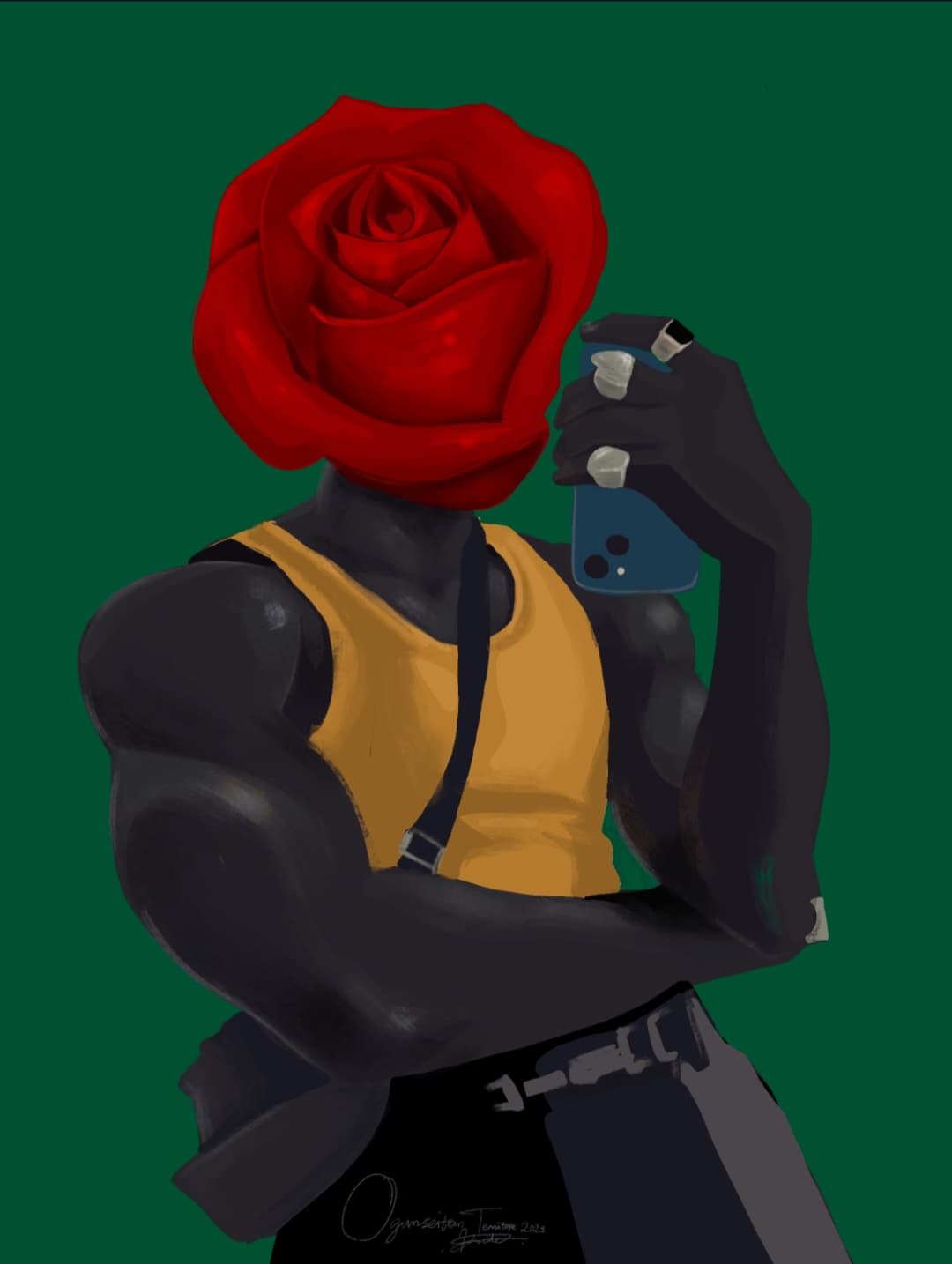
Ókunrín — meaning MAN in Yoruba — is a reflection on what it means to be a male figure: to be resilient, and to carry burdens no one else sees. This figure is built strong, his posture steady and unshaken, capturing the old, familiar idea that he is the one who takes responsibility, who holds things together, and who stands firm even when life gets dark. He does not bend, he does not complain, and he never lets weakness show. He is the support, the protector, the solid ground others lean on.
But instead of a face, I use a bright red rose that blooms where his head should be — a deliberate, powerful choice that tells the deeper truth of my work. The rose stands for beauty, softness, feeling, and vulnerability — things we are taught do not belong with "strength." Here, they are not opposites; they are part of the same whole. This image reminds us that behind every act of strength, every day of carrying on, and every quiet struggle, a man is still human. He has limits. He can break. He has a soft side that needs care, a heart that needs to be understood, and moments when he too needs someone to lean on.
Here is my personal story, a self-portrait which reflects how much is expected from family and friends while I struggle to survive and make ends meet. Diaspora family back home carry so much expectation.
This piece pushes back against the idea that being strong means being unbreakable. It says clearly that inside every kind of masculinity, there is always a part that is gentle, sensitive, and open — what we might call a little bit of femme. True strength isn't about having no feelings at all; it's about carrying both power and tenderness. It is a reminder that even the strongest people need support, kindness, and someone to stand with them when the weight gets too heavy. Ókunrín is not just about the masculine figure — it is a reminder to see, respect, and care for the full individual who represents a manly figure in our life.